
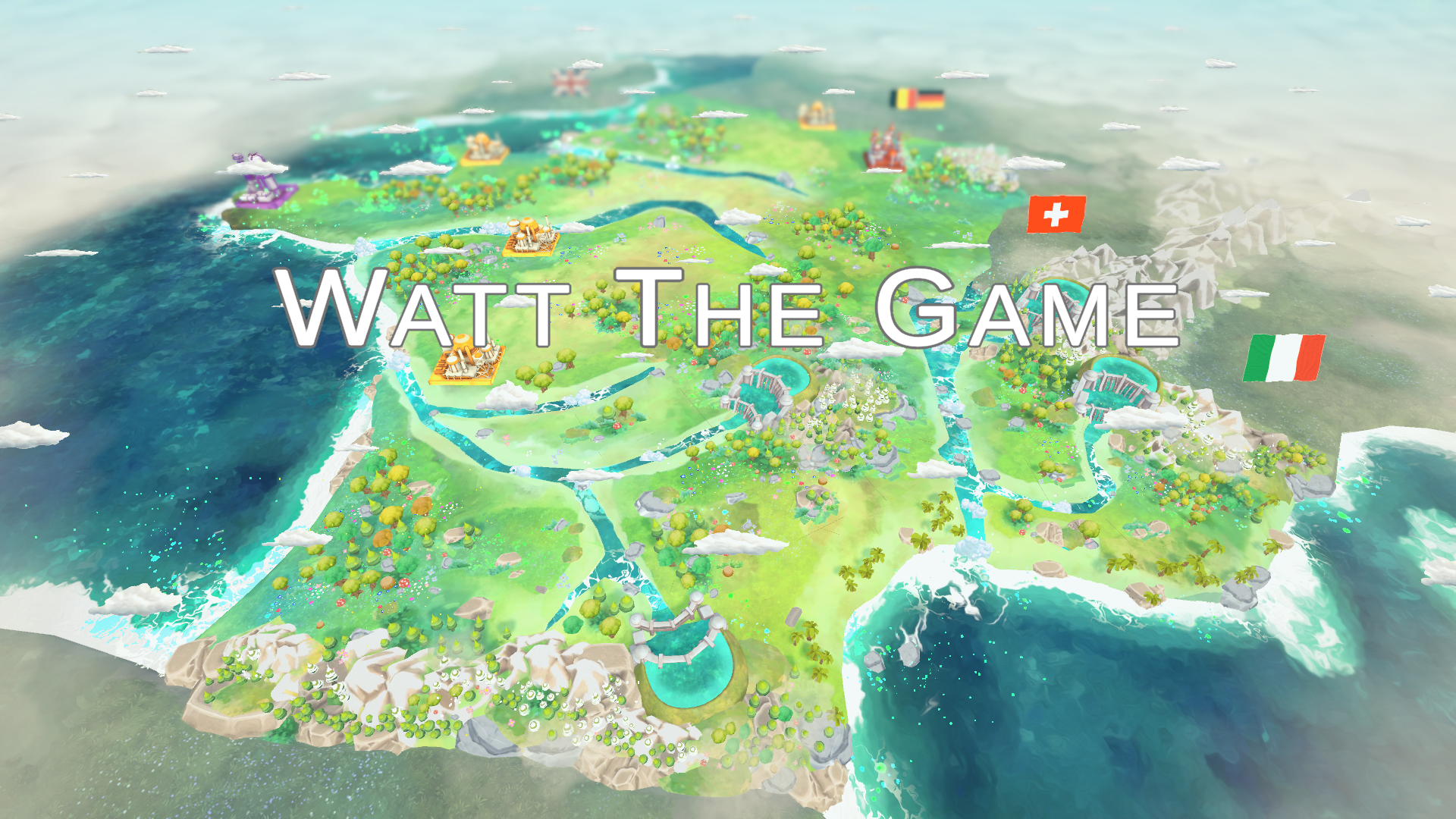
Pitch :
Learn to manage France’s energy balance like EDF’s DOAAT (Direction Optimisation Amont/Aval & Trading) by playing in a simulation that reproduces their daily challenges.
Gameplay video :
About the creation :
This was my main project completed at Virtuallyz over eight months for EDF. The project was developed using Unity in C#, targeting web browsers and specifically an internal EDF training platform using SCORM evaluation packages.
The team for this project consisted of one programmer (myself) and one full-time game designer, along with a 3D game artist and a 2D game artist who contributed occasionally, all managed by a producer.
The goal of this project, commissioned by EDF, was to create an engaging interactive game that could serve as a self-paced training tool for employees. This game aimed to replace more traditional and time-consuming training methods, helping employees learn about the roles and challenges within the DOAAT (Direction Optimisation Amont/Aval & Trading). To achieve this, we held weekly meetings with a multidisciplinary team from EDF, including DOAAT employees, the project manager, the training department manager, the training platform administrator, and specialized field experts. The objective of these meetings was to ensure that the educational expectations were accurately translated into gameplay, in accordance with the pre-established Game Design Document (GDD). My role as a programmer was to translate the GDD into code and to discuss the feasibility, complexity, and value of each feature with the clients.
My daily tasks involved integrating graphical and audio assets, implementing features, checking for regressions, ensuring playability and performance, especially crucial for a web-based project with more technical limitations than a traditional executable and maintaining a clean code and data structure. The structure was the biggest challenge because the game consists of about a dozen interconnected but independently managed micro-features, each with its own data representation, user interface, and potentially 3D assets. Additionally, the representation scales changed depending on the game’s difficulty mode. Data had to be translated according to the selected mode and transmissible to the next mode. I am quite satisfied with the final architecture, despite the changes made during the project.
I collaborated extensively with the game designer, as one of the biggest challenges we faced was representing professional skills through gameplay mechanics. We aimed to accurately reflect their daily tasks while keeping the ultimate goal of fun and engagement in mind. We tried to maintain realistic scales by incorporating proven gameplay mechanics from video games. This balance was a fine line to walk and the subject of many of our team discussions.
After several beta tests conducted at EDF’s premises, the results were more than satisfactory for both the testers/players and the project monitoring team. This led to a nomination for the Digital Learning Trophy by EDF. My personal work was appreciated for its quality and the speed at which I addressed feedback.
Thank you for reading. You can find more information by clicking the button below.


